
Contact phone icon representing direct access to 2-0 LCA life cycle assessment expertise for driving sustainable decision-making
GET IN TOUCH

Life Cycle Assessment of RSPO Certified Palm Oil, Phase III

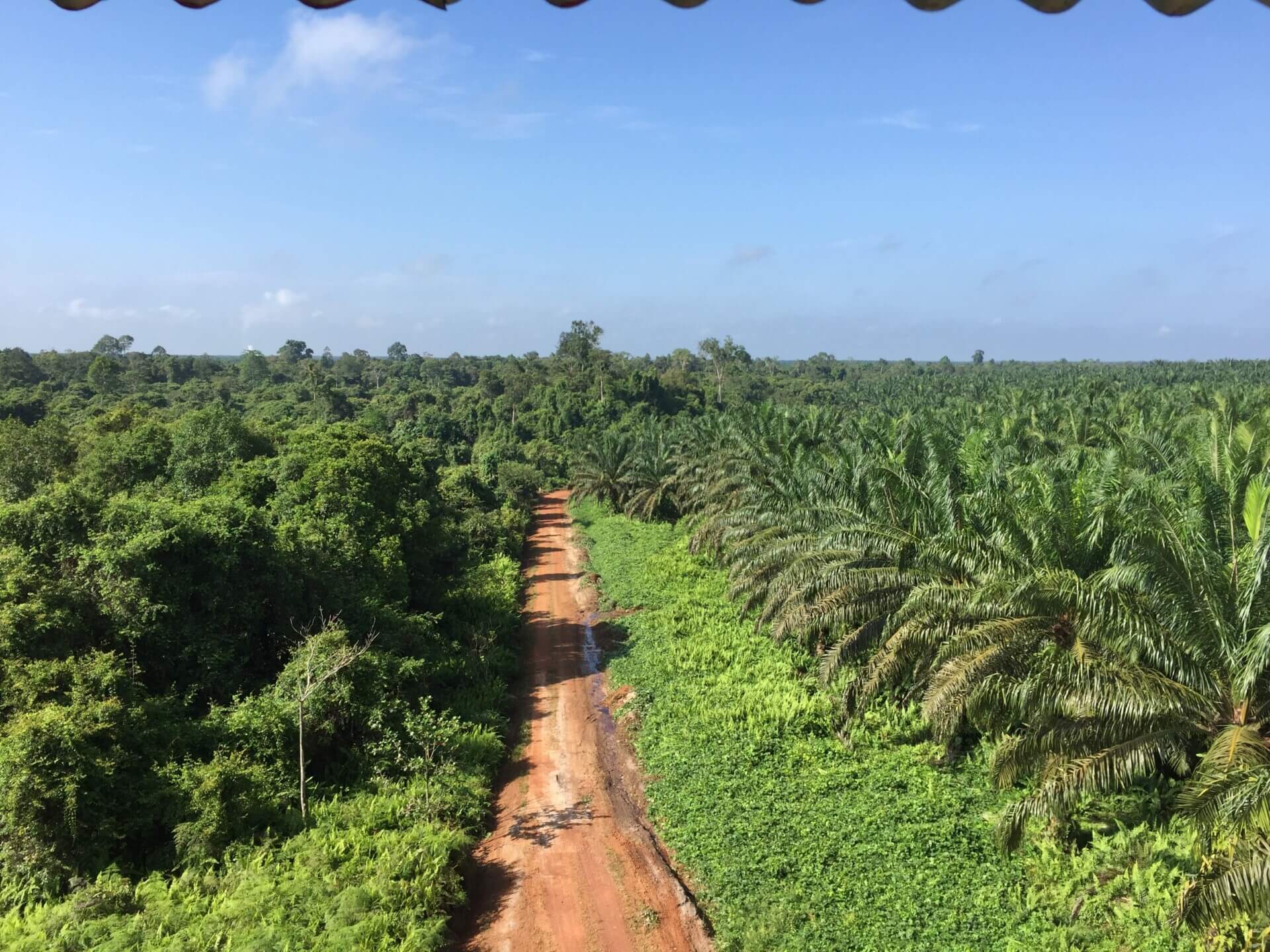
Palm oil plantation next to natural forest separated by dirt road demonstrating LCA and sustainable land use assessment
Client
Roundtable on Sustainable Palm Oil
Date
2026-2028
Our role

2-0 LCA consultants started this initiative. The project is promoted and endorsed by the Roundtable on Sustainable Palm Oil (RSPO), but carried out independently of RSPO.


This project aims to develop time-series of life cycle (LCA) results of RSPO certified versus non-certified palm oil. Further, the LCA is differentiate between producing countries and type of growers (estates and smallholders)

New collaborative project: LCA of RSPO certified and non-certified palm oil

The problem

Recently, our second crowdfunded project on a comparative LCA of RSPO certified and non-certified palm oil was finalised with a scientific paper (see more here)

The study examined GHG emissions and other impacts for palm oil production in Indonesia, Malaysia, Thailand, Colombia and Nigeria. The effects of Round Table on Sustainable Palm Oil (RSPO) certification were specifically investigated. It showed that RSPO certified palm oil was associated with 36% less global warming potential and 37% less nature occupation impacts compared to non-certified production. Key benefits from certified production stem from less peatland cultivation, improved water management in peatland,  and more palm oil mill effluent (POME) treatment with biogas capture.

However, palm oil producers (certified or not) are not static, and neither are the effect of certification on producers. E.g. from 2016 to 2021, we have observed that the share of certified oil mills with biogas capture have increased significantly. Further, RSPO criteria are expected to lead to reduced cultivation on peat and more nature conservation. Therefore, it is highly relevant to follow the development over time.

Palm oil using companies are currently reporting their contribution to GHG reductions due to their commitments of buying RSPO certified palm oil. They do this by using the results of our first and second crowdfunded projects. As the impact of RSPO certified versus non-certified palm oil is not static, it is important to consistently track the developments to make correct claims.

For mitigation of GHG emissions and impacts on biodiversity, it is important to identify the most important mitigation options and their impacts.

Several large palm oil using companies are using traceability data on their palm oil supply in combination with the detailed model developed in our crowdfunded projects to calculate tailored GHG inventories of their palm oil supply. To ensure that this approach to GHG accounting is based on reliable data, it is essential to ensure that the most recent data for both RSPO certified as non-certified palm oil producers are collected and made available.

The solution: crowdfunded project

Join this project as a partner and support the development of the next life cycle assessment (LCA) comparing RSPO certified palm oil with non-certified palm oil.

The project is setup as a crowdfunded project:

  • The fee for joining the project is 5,200 EUR per company.
  • The above fee is a one-off fee that provides a valid membership until end of the project.
  • The project is finalised with the publication of a peer reviewed scientific paper. This is expected in 2028.
  • During the project, members have exclusive early access to results, the opportunity for joining projects meetings, and for influencing the scope definition of the project.
  • The threshold for initiating the project is 15 members. Additional budget for >15 members is used to expand the scope of the project, e.g. more detailed data, improved models, investigation of more mitigation options etc. This is decided by the members of the project.

The scope of the study is:

  • Results are presented for functional units
    • 1 tonne crude palm oil (CPO)
    • 1 tonne crude palm kernel oil (CPKO)
    • 1 tonne refined palm oil (refined, bleached and deodorised)
  • LCA methods: The results are calculated following two approaches: 1) consequential LCA according to ISO 14044, and 2) The GHG Protocol Land Sector and Removals Standard
    • Consequential model: Multifunctionality modelled by substitution, marginal supply mixes are applied, land use changes are modelled using indirect land use changes, and nature conservation benefits are explicitly modelled.
    • GHG Protocol (attributional) model: Multifunctionality modelled using economic allocation (with some exceptions), average supply mixes are applied, and land use changes are modelled using historical land use changes with linear discounting.
    • Additional: Some additional modelling options are provided.
  • Temporal boundary
    • Results are presented for 2016, and annually from 2021 and onwards.
  • Geographical boundary
    • The following producing countries are specifically inventoried: Indonesia, Malaysia, Thailand, Colombia, and Nigeria.
  • Technological delimitation: Production data are differentiated for
    • RSPO certified and non-certified
    • Estates (large growers) and smallholders
  • Life cycle impact assessment
    • Covering a wide set of environmental impact categories, including GHG emissions and biodiversity.

More details on our previous study, on which the current study builds, can be found in a recent paper from February 2026 here:

Why this is needed

  • For palm oil using companies, to be able to report on impacts and to claim reductions derived from sustainable sourcing;
  • For certified producers, to show the advantage of RSPO certified palm oil over non-certified palm oil;
  • For a broad range of relevant stakeholders:
    • Identification and quantification of improvement potentials for palm oil;
    • Enable certification institutions, such as RSPO, to prioritise certification criteria and to set targets for GHG emissions reductions;
    • For environmental footprinting of products containing certified sustainable palm oil.
    • For policy support.

Deliverables

  • Results for 2016, and 2021 and onwards
    • First sets of results delivered one year after kick-off at the latest
    • After that annual updates are provided until end of the project.
  • Meetings: At least one status meeting every 6 months:
    • Presentation of project, methods, data and results.
    • Consultation of members for inputs
  • Publication of scientific peer reviewed paper.

Timeline

The project is open for subscription on 9th June 2026.

When the threshold of 15 members is achieved, the project is officially kicked off.

First results are delivered one year after kick-off. After this, annual updates are delivered until end of the project.

Scientific paper submitted, expected in 2028.

When the project is kicked-off, and after reviewing the data collection plan, an updated timeline is provided

Become a member

Joining the new crowdfunded project will grant you access to all data and results, and you have access to influence the scope of the project.

The price of subscription is a one-time amount at 5,200 EUR. The funds from new subscriptions will be used to expand the scope of the project.

For subscription (or questions), please contact us. To go to the club click here.

Jannick Schmidt, CTO at 2-0 LCA
Connect with the expert
Jannick Schmidt
Chief Technology Officer
Get in touch
Jannick Schmidt, CTO at 2-0 LCA

Jannick Schmidt

As CTO of 2-0 LCA, Jannick is responsible for the development of the LCA models and methods that make underpin all our work. He is widely recognised as one of the world’s leading experts on life cycle assessments of agricultural products, indirect land use change, and biodiversity assessments — particularly the environmental impact of vegetable oils. Besides his work for 2-0 LCA, Jannick holds a professorship at the Department of Sustainability and Planning at Aalborg University.

Contact for: Biodiversity


Contact Jannick Schmidt
Footer top background effect
crosschevron-down