




NEW COURSE
When: November 2, 3, 9, 10, 16 and 17, 2026 (Mondays and Tuesdays). All sessions 13:00-16:00 CET
Where: Online
Learn the theory and practice of consequential life cycle assessment with this course for practitioners. Whether you are an experienced LCA practitioner or new to the field, this course offers a comprehensive introduction to consequential modelling, with plenty of time for advanced topics.
Participant fee: € 2,200 EX. VAT.
University staff and students receive a 30% discount on the course fee.

All exercises, methods, and examples are generic and applicable across different cases and sectors. Throughout the course, we use biofuels as a common example case to demonstrate and practice the concepts.
Between sessions, participants can apply the learnings directly to their own cases and receive feedback on their implementation. The course combines theory with extensive hands-on practice, both through the shared biofuel example and through participants' own cases.
In essence, we not only teach the principles of consequential LCA, but also support participants in building and applying consequential LCA for their own case.
Module 1: Introduction to LCA and its purpose
Module 2: Life cycle concepts and system modeling
Module 3: Interpreting, quality assuring and communicating LCA
For more information about the course content, please refer to the expanded sections at the bottom of the page.
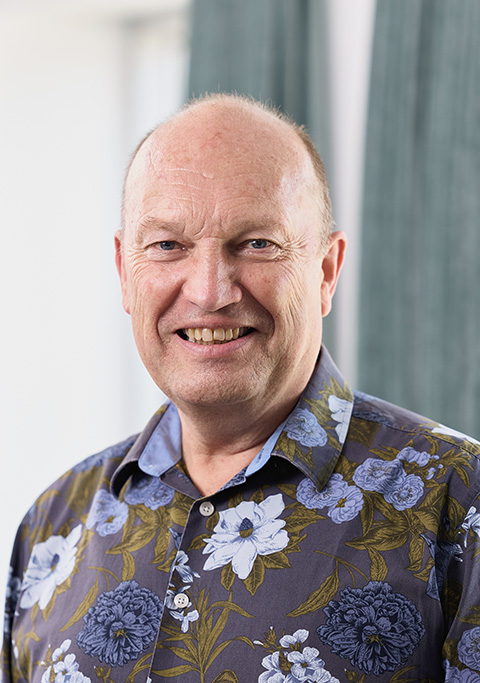

With over thirty years of experience in life cycle assessment, Bo Weidema has been a driving force in developing the field. Bo manages the day-to-day leadership at 2-0, and play a key role as Senior Consultant.
Bo has been dedicated to improving and developing the field of life cycle assessment with his work as executive manager and chief scientist of the Ecoinvent database from 2008-2014 and by contributing to better ISO standards and the UNEP/SETAC Life Cycle Initiative. Besides his continuing work for 2-0, Bo is a professor at Aalborg University’s Department of Sustainability and Planning and president of the International Life Cycle Academy in Barcelona.
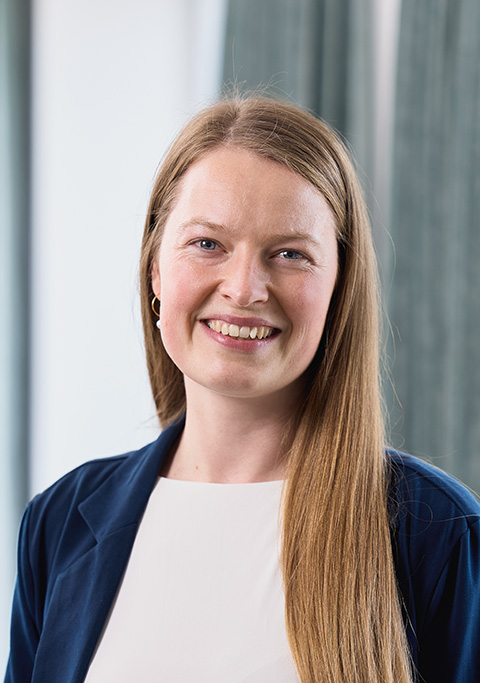
As Chief Operating Officer, Iris leads our organisational development and oversees day-to-day operations. Before joining 2-0, she worked in the biotechnology sector. As an LCA consultant, Iris has devoted her expertise primarily to the domains of sustainable agriculture and food production. She is dedicated to teaching LCA and is responsible for our educational efforts. Iris holds an M.Sc. in Biology – Biotechnology from the University of Copenhagen.
Contact for: LCA Training

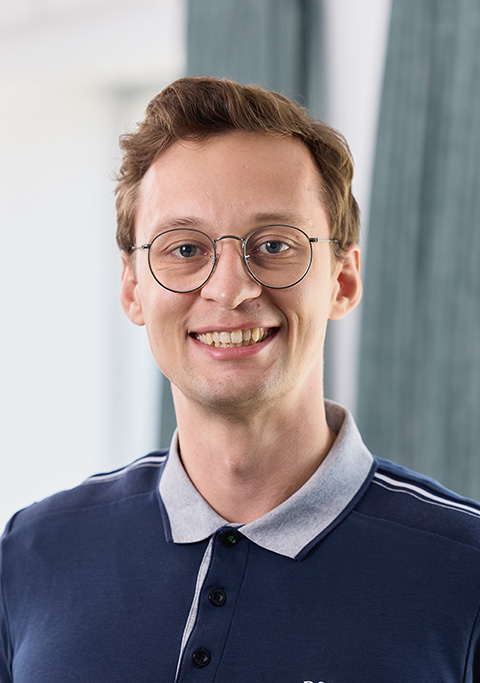
Jonas is a project lead with a wide interest in many aspects of LCA. His interests include consequential LCA methodology, Hybrid I/O LCA, fishery and aquaculture, palm oil, forestry and land use, carbon offsetting and construction. Jonas' master thesis focused on evaluating and improving the internal LCA methodology within a streamlined carbon footprint calculator tool designed to assist Danish small and medium-sized enterprises (SMEs). Jonas holds a BSc in Techno-Anthropology and MSc in Environmental Management and Sustainability Science from Aalborg University. (2021)
Contact for Land use change and Construction
When: November 2, 3, 9, 10, 16 and 17, 2026 (Mondays and Tuesdays). All sessions 13:00-16:00 CET (possible to adjust depending on participants)
Where: Online
Registration fee is EUR 2200,- EX VAT and does not include travel costs, accommodation and meals. University staff and students receive a 30% discount on the course fee.
Registration takes place until October 15th or until all seats are taken - so don't wait too long to secure your spot.
"The course was valuable not only because of the technical knowledge shared, but also because it opened up the logic and mindset behind consequential thinking in LCA. In an age where information is widely accessible and learning new concepts has become easier than ever, what becomes especially valuable is learning how experienced experts think: how they frame a problem, where they focus their attention, and how they make methodological choices. For me, this course was a strong example of how training can move beyond knowledge transfer and become a form of experience and mindset transfer."
"Consequential LCA is one of the most intellectually demanding approaches in sustainability science. Unlike traditional attributional approaches, a consequential LCA captures how decisions ripple through supply chains and markets, making it a powerful tool for real-world environmental decision-making. It challenged me to think more carefully about which impacts matter, to whom, and how our modeling choices shape the actions we recommend.
If you work in sustainability, circular economy, or product stewardship, I highly recommend this type of rigorous training."
To ensure everyone starts out on the same footing, we provide pre-reading materials and introductory sessions on the first day to establish a shared vocabulary. On the second and third days, we dive deeper into advanced topics. Each day will include challenges tailored to all skill levels, ensuring we meet you at your current level of expertise.
Contact Iris if you're unsure whether this course is the right fit for you
Masters degree or equivalent is recommended for the course, and you must bring your own laptop computer.
Cancellation by Participant Cancellations must always be made in writing. The following terms apply to our courses:
Cancellation by 2-0 LCA: In the event of an insufficient number of registrations, 2-0 LCA reserves the right to postpone or cancel the course or event. Any expenses incurred by participants in relation to travel, accommodation, or similar will not be reimbursed by 2-0 LCA.
Replacement of Participants: If a registered participant is unable to attend, another person from the same organisation may take their place at no additional cost. The replacement must be notified to 2-0 LCA in writing no later than three working days before the start of the course. Any changes made after this time may not be accommodated.
Material Property: All course materials, presentations, and content provided by 2-0 LCA are the intellectual property of 2-0 LCA. Participants may use the materials for personal or internal organisational purposes only. No materials may be copied, distributed, shared, or published outside the participant’s organisation.
Vendor Portal Registration and Invoicing:
Should 2-0 LCA be required to register in the client’s Vendor Portal for the purpose of receiving orders and submitting invoices, a one-time fee of EUR 1150 will be incurred.
In the first module, you learn how to put together a complete but simple life-cycle assessment and get an introduction to all four phases of the LCA framework. We also explore the differences between consequential and normative modelling approaches, become familiar with relevant LCA standards, and learn the basics of reporting and critical review. Finally, the session introduces hybridisation methods where you learn how to incorporate your detailed data into an LCI process. In this course, you will learn how to make hybrid processes using the LCA database EXIOBASE.
In the second module, the course dives deeper into LCI modelling, focusing on what to do when life-cycle inventories are no longer simple. You learn how to identify marginal suppliers and understand market dynamics, as well as how to correctly link unit processes. The day also covers co-production, recycling, and system expansion, along with the treatment of indirect land-use change (iLUC). You’re introduced to how different LCA databases are constructed and explore the differences between bottom-up and top-down approaches, including how process-based LCA compares to input–output LCA.
In the third module, the focus shifts to interpretation and quality control, taking a detailed look at phase four of the LCA framework. You learn to recognise common mistakes in LCA studies and evaluate the overall quality of assessments. The course also covers how to present results clearly while ensuring transparency, and how to navigate different standards and meet the expectations of various stakeholders.