


2-0 LCA consultants have started this initiative. The project is promoted and endorsed by Round Table for Sustainable Palm Oil (RSPO) – but carried out independently of RSPO.
This project produced a life cycle assessment (LCA) comparing RSPO certified and non-certified palm oil across the five largest producing countries, differentiated by country, sub-national region and type of grower (estates and smallholders), with results for 2021 compared against 2016. The study is now complete and published in the peer reviewed journal Sustainable Production and Consumption (Schmidt and Weidema, 2026).
Key findings
For a shift in demand on the global market, RSPO certified palm oil performs markedly better than non-certified:
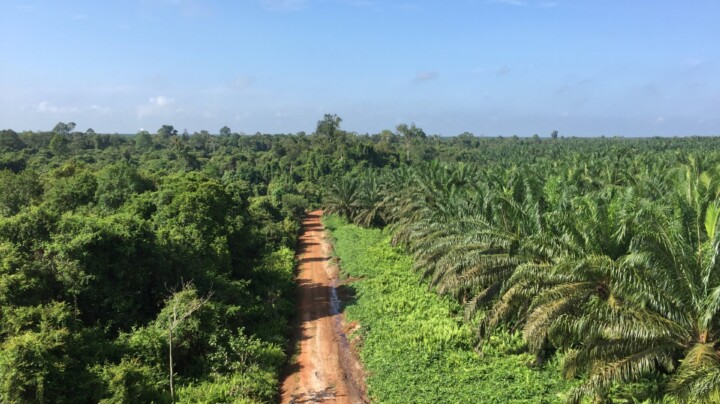
Global warming ranges from 1.9 to 11.7 kg CO2-eq. per kg of refined palm oil, depending on country and practice. The certified advantage comes mainly from less cultivation on peat, shallower peat drainage and a higher share of POME treated with biogas capture. The benefit is largest where peat is involved: in Sarawak, non-certified production on peat reaches 11.7 kg CO2-eq. per kg, against 1.4 for certified. The full results are in the published study.
What the study covered
What the results show
What the results let you do
Improvement options identified
Taking the least productive peatlands out of cultivation and rewetting them, preventing new development on peat, expanding biogas capture and its use, and improving the efficiency of smallholder operations. The study also points to options worth exploring further, such as green nitrogen fertiliser and biochar.
Publications
The third phase is now underway
Building on this work, we have now started the third phase of the palm oil LCA: https://2-0-lca.com/clubs/palm-oil/. As a partner you get access to all data and results, and you can help shape the scope.
The price of subscription is a one-time amount at 5,200 EUR. The funds from new subscriptions will be used to expand the scope of the project.
For subscription (or questions), please contact us. To go to the club click here.
Partners of this project
This study was crowdfunded through 2-0 LCA, with financial support from ERASM, Ferrero, Syensqo, BASF, Oleon, Novonesis, AAK and Beiersdorf. RSPO supported the work by providing data extracts from the PalmGHG tool. The partners had no role in the design, data collection, analysis or writing of the study.
Earlier work: the first crowdfunded project 2016-2019
The first study compared certified and non-certified palm oil in Indonesia and Malaysia for 2016 and found 35% lower global warming and 20% lower biodiversity impact for certified. Its outreach included:

As CTO of 2-0 LCA, Jannick is responsible for the development of the LCA models and methods that make underpin all our work. He is widely recognised as one of the world’s leading experts on life cycle assessments of agricultural products, indirect land use change, and biodiversity assessments — particularly the environmental impact of vegetable oils. Besides his work for 2-0 LCA, Jannick holds a professorship at the Department of Sustainability and Planning at Aalborg University.
Contact for: Biodiversity