

Jannick Schmidt | Sponsor presentation | 23 Sept 2026, 16:35
Meet 2-0 LCA and discover how our work connects data, life cycle modelling and decision support in our 3-min sponsor pitch.


Valentin Starlinger | BONSAI | 25 Sept 2026, 08:40
Where do the water scarcity impacts of consumption occur?
This session brings together BONSAI and the Python library edges to explore how French consumption affects water scarcity in producer regions around the world. It demonstrates a reproducible workflow for geographically explicit impact assessment, with a notebook that participants can explore and adapt.
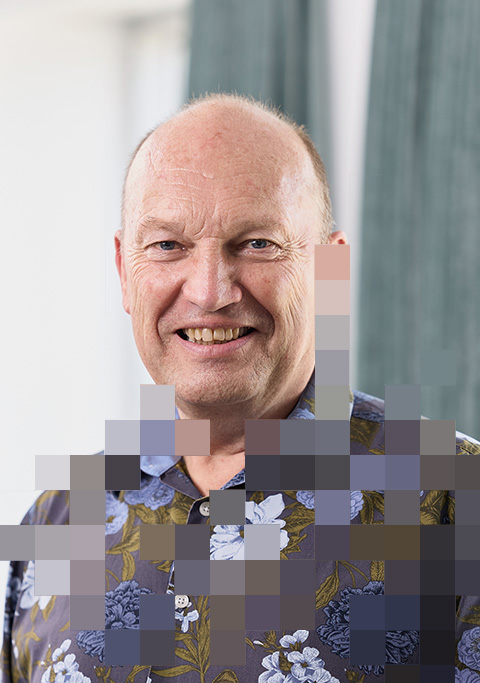
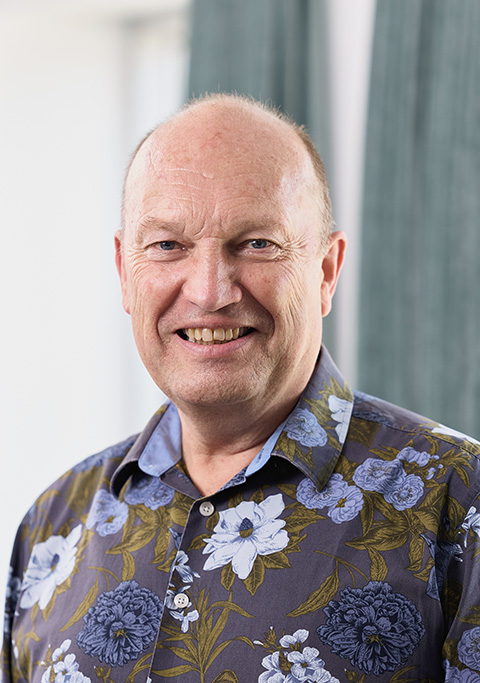

With over thirty years of experience in life cycle assessment, Bo Weidema has been a driving force in developing the field. Bo manages the day-to-day leadership at 2-0, and play a key role as Senior Consultant.
Bo has been dedicated to improving and developing the field of life cycle assessment with his work as executive manager and chief scientist of the Ecoinvent database from 2008-2014 and by contributing to better ISO standards and the UNEP/SETAC Life Cycle Initiative. Besides his continuing work for 2-0, Bo is a professor at Aalborg University’s Department of Sustainability and Planning and president of the International Life Cycle Academy in Barcelona.
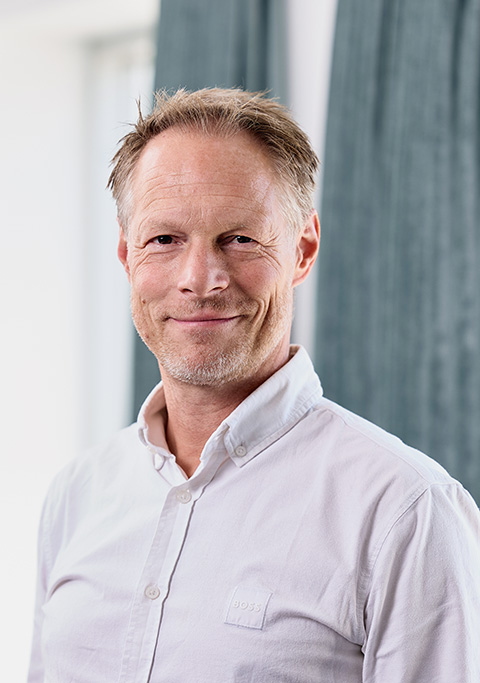
As CTO of 2-0 LCA, Jannick is responsible for the development of the LCA models and methods that make underpin all our work. He is widely recognised as one of the world’s leading experts on life cycle assessments of agricultural products, indirect land use change, and biodiversity assessments — particularly the environmental impact of vegetable oils. Besides his work for 2-0 LCA, Jannick holds a professorship at the Department of Sustainability and Planning at Aalborg University.
Contact for: Biodiversity
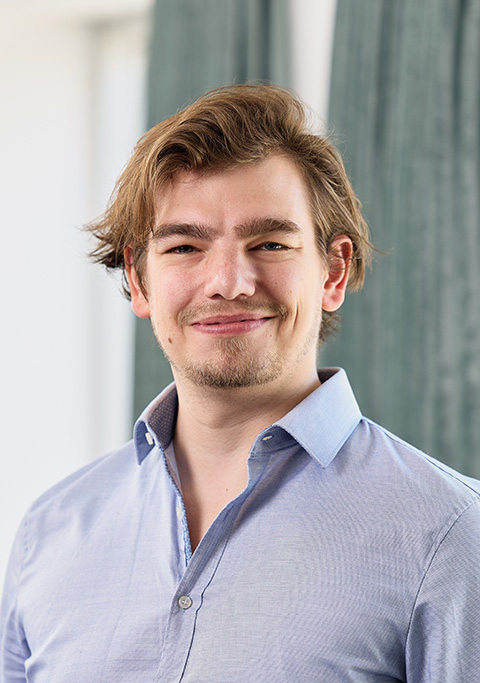
Valentin is the lead developer of our next generation LCA database, BONSAI. His work involves coordinating tasks, reviewing code, and developing backend solutions. He also looks for ways to make life easier for his colleagues by automating processes and improving internal workflows with better software tools. With a background in aerospace engineering and robotics, he enjoys tackling complex data challenges and finding practical solutions.
Valentin holds a B. Sc. in aerospace engineering from the University of Stuttgart and a M.Sc. in ‘Robotics, Cognition, Intelligence’ from Technische Universität München.
Help build the next generation of food footprint data
Join a shared effort to update and expand the Big Climate Database. The project aims to provide updated food footprints, add land use and biodiversity indicators, and support both decision-making and GHG reporting. Members help fund the work and contribute to discussions on its development.
Improve palm oil data through shared research
Support the next phase of our research comparing RSPO certified and non-certified palm oil. The project will track environmental impacts over time and examine differences between producing countries and grower types. Members help shape the scope and receive early access to results.
Strengthen a shared foundation for LCA
Help develop and update EXIOBASE-hybrid, which connects physical and economic flows across sectors and regions. By sharing the cost of development, members support improvements to a common data resource and help identify priorities. Materials developed through the project are made publicly available.
Explore the development of open sustainability data
BONSAI is our attempt to solve a problem the whole field has: a reliable, freely accessible footprint database covering the world economy, without the gaps and licensing walls that limit the databases most of us grew up on.
Put consequential thinking into practice
Build your skills through theory, hands-on exercises and discussion of your own cases. Our online course covers consequential modelling, marginal suppliers, hybridisation and quality assurance over six afternoons in November 2026.
Work through the modelling choices
How do you identify affected suppliers, handle co-production or model changes in demand?
Consequential-lca.org provides open explanations and examples to help you work through consequential modelling. Initiated and maintained by 2-0 LCA, it also welcomes contributions from the community.
Find the words behind the methods
From functional units and system boundaries to marginal suppliers and substitution, our glossary explains the terms used in life cycle assessment. Use it to clarify a concept, refresh your knowledge or build a shared understanding with colleagues.
Get the numbers you need to guide improvements and investments
We carry out life cycle assessments tailored to your products, operations and decisions. From collecting data and building models to interpreting the results, we help you understand where environmental impacts arise and what you can do to reduce them. Use the findings to compare alternatives, prioritise improvements and direct investments where they can make the greatest environmental difference.
Address the gaps in your assessment
Some questions require more detail than existing databases provide. We develop tailored life cycle inventories and data solutions, combining methodological expertise with an understanding of the products, sectors and systems being assessed.
Make your models useful beyond a single study
Turn your LCA models into tools for repeated calculations and scenario comparisons. We develop solutions ranging from spreadsheets and Python-based models to dashboards and integrations with existing systems, helping teams use LCA in their daily work.
Understand how your decisions affect nature
Explore how land use and indirect land use change influence the environmental consequences of your choices. We help identify biodiversity impacts across value chains and assess trade-offs alongside climate and other environmental objectives.

Our team members come from all over the world and from many different backgrounds. Based in Denmark, The Netherlands and Spain, what unites us is our dedication to knowledge sharing, quality and science-based decision-making.










Arla Foods dairy emissions ”FarmAhead™ Check” tool](https://2-0-lca.com/wp-content/uploads/2014/05/ARLA-2-FarmAhead-press-image-720x404.jpg)
Comparing biofuel impacts for Maersk](https://2-0-lca.com/wp-content/uploads/2025/03/Ane-Maersk_20-March-2024_Arriving-at-Tangier_DSC00327_graded-720x404.jpg)
Platinum-group metals LCI update for Topsoe](https://2-0-lca.com/wp-content/uploads/2024/08/metals-alex-sanchez-EGTLmF9eMHM-unsplash-720x404.jpg)
SUNGATE - Next Generation Solar Fuels](https://2-0-lca.com/wp-content/uploads/2024/05/266be83ae8ea2b518a115ac39aee51d92-720x404.jpg)
LCA Tool for Danish Crown](https://2-0-lca.com/wp-content/uploads/2023/06/kameron-kincade-V5-QE9NELwM-unsplash-720x404.jpg)
Life Cycle Assessment of Kangamiut Seafood Products](https://2-0-lca.com/wp-content/uploads/2026/10/paul-einerhand-qLIglFCcAeo-unsplash-720x404.jpg)