



Multi-Criteria Decision Analysis (MCDA) is a method for analysing and structuring complex decision-making problems by explicitly considering multiple decision criteria. This systematic approach provides a framework for evaluating options when decisions involve trade-offs between different, often conflicting, objectives.
In the context of Life Cycle Assessment and sustainability decision-making, MCDA serves as a valuable tool when stakeholders must weigh various environmental, economic, and social factors simultaneously. Unlike single-criterion approaches that might focus solely on cost or a single environmental indicator, MCDA acknowledges that real-world decisions require balancing multiple priorities.
The method typically involves several key steps: defining the decision problem and objectives, identifying relevant criteria, establishing the relative importance or weighting of these criteria, evaluating alternatives against each criterion, and aggregating the results to support decision-making. Different MCDA techniques exist, ranging from simple weighted scoring methods to more sophisticated approaches such as the Analytic Hierarchy Process (AHP), ELECTRE, or PROMETHEE.
MCDA is particularly useful in LCA when comparing alternative products, processes, or systems that perform differently across various impact categories. For instance, one product might have lower climate change impacts but higher water consumption, whilst another might show the opposite pattern. MCDA provides a structured way to navigate these trade-offs based on stakeholder values and priorities.
The explicit consideration of multiple criteria distinguishes MCDA from optimisation approaches that seek to maximise or minimise a single objective. By making criteria and their relative importance transparent, MCDA supports more informed and defensible decision-making in complex sustainability assessments.
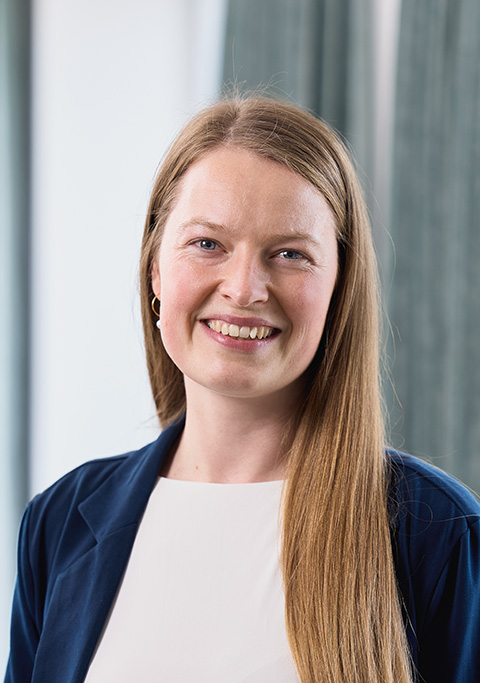
As Chief Operating Officer, Iris leads our organisational development and oversees day-to-day operations. Before joining 2-0, she worked in the biotechnology sector. As an LCA consultant, Iris has devoted her expertise primarily to the domains of sustainable agriculture and food production. She is dedicated to teaching LCA and is responsible for our educational efforts. Iris holds an M.Sc. in Biology – Biotechnology from the University of Copenhagen.
Contact for: LCA Training