Solutions



Services






A capital good is a Product with a lifetime in active use exceeding one year. Capital goods are durable assets used in production or service delivery over extended periods, as opposed to consumable inputs that are used up more quickly.
In Life Cycle Assessment, capital goods pose modelling challenges due to their extended service lives and the need to distribute their environmental burdens across multiple production cycles or functional units. The one-year threshold provides a practical boundary between capital goods and consumable products, though the actual service life of capital goods can range from several years to decades depending on the asset type and maintenance practices.
Within LCA databases such as ecoinvent, capital goods are typically modelled as services rather than physical products. This reflects how capital goods provide productive capacity over time. The modelling relies on properties such as "capacity" or "lifetime capacity" to distribute the environmental impacts of manufacturing, maintaining, and disposing of the capital good across the total output it enables over its lifetime.
Common examples of capital goods in LCA studies include industrial machinery, production facilities, transport vehicles, and buildings. The environmental burdens of these assets, including raw material extraction, manufacturing, installation, maintenance, and end-of-life treatment, must be distributed carefully to avoid over- or under-counting their contribution to the product systems they support.
The terms capital good, Infrastructure, and investment are used synonymously in LCA practice, all referring to this category of long-lived productive assets.
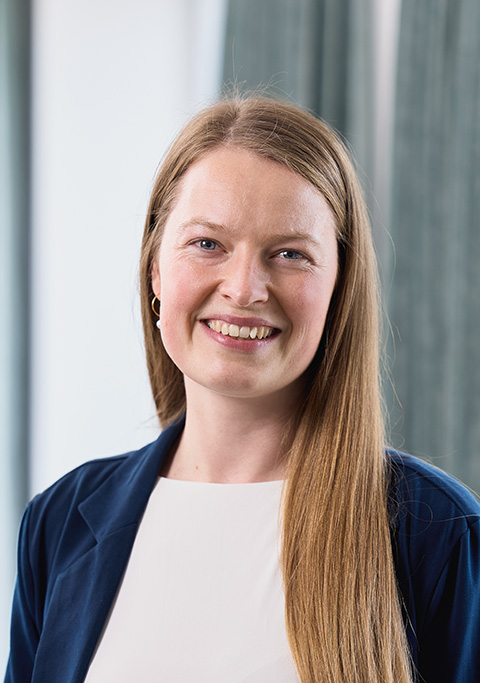
As Chief Operating Officer, Iris leads our organisational development and oversees day-to-day operations. Before joining 2-0, she worked in the biotechnology sector. As an LCA consultant, Iris has devoted her expertise primarily to the domains of sustainable agriculture and food production. She is dedicated to teaching LCA and is responsible for our educational efforts. Iris holds an M.Sc. in Biology – Biotechnology from the University of Copenhagen.
Contact for: LCA Training
Glossary terms are clearer once you have seen them applied. Our guide to what LCA is and how it works walks through the complete methodology: goal and scope, inventory modelling, impact assessment, and interpretation.
If you are working on an LCA study and want it done properly, see how we approach life cycle assessment.