



The Willingness-To-Pay method is a monetary valuation approach that seeks to assess changes in utility arising from environmental or social impacts. This method provides a way to assign monetary values to non-market goods and services by measuring what individuals or society would be willing to pay for improvements or to avoid deterioration in environmental quality, health outcomes, or other welfare-affecting conditions.
The fundamental principle underlying the Willingness-To-Pay method is that it directly measures value based on human preferences and choices. It recognises that the true value of an environmental impact or benefit is reflected in what people would actually be prepared to sacrifice to obtain or avoid it. This makes it particularly relevant for Life Cycle Assessment when practitioners need to aggregate diverse environmental impacts into comparable units for decision-making.
The Willingness-To-Pay method stands in contrast to abatement cost methods, which are fundamentally different in their approach to valuation. Whilst abatement cost methods calculate the hypothetical costs of implementing technologies or measures that could reduce environmental impacts, they do not actually measure value. Abatement cost approaches assess potential, hypothetical future costs of marginal abatement activities without providing evidence that an individual, organisation, or public body would actually commit to implementing these activities. Therefore, abatement costs represent engineering or technical possibilities rather than true measures of societal value or willingness to address environmental problems.
In LCA practice, the Willingness-To-Pay method enables practitioners to convert diverse environmental and social impacts into monetary terms, facilitating more comprehensive cost-benefit analyses and supporting decision-making processes where trade-offs between different types of impacts must be evaluated. This approach aligns with welfare economics principles by focusing on actual preferences rather than technical potential.
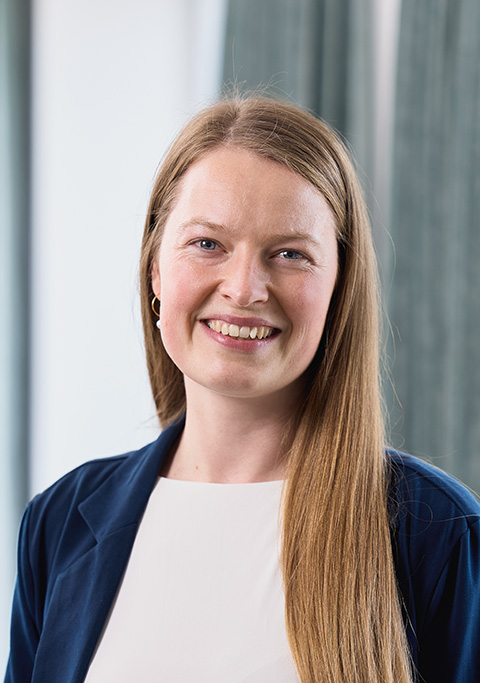
As Chief Operating Officer, Iris leads our organisational development and oversees day-to-day operations. Before joining 2-0, she worked in the biotechnology sector. As an LCA consultant, Iris has devoted her expertise primarily to the domains of sustainable agriculture and food production. She is dedicated to teaching LCA and is responsible for our educational efforts. Iris holds an M.Sc. in Biology – Biotechnology from the University of Copenhagen.
Contact for: LCA Training