



The Value of Life Year (VOLY) represents the Willingness to pay value for a marginal improvement in life expectancy. This economic metric quantifies how much individuals or society are willing to pay to gain an additional year of life expectancy, providing a monetary valuation for health-related impacts in Life Cycle Assessment and cost-benefit analysis.
VOLY differs from the related concept of Value of Statistical Life (VSL) in its temporal granularity. Whilst VSL measures the willingness to pay for a marginal change in the probability of death, VOLY focuses specifically on extensions to life expectancy measured in years. In practice, VSL can be converted to VOLY through a simple calculation: by dividing the VSL by the number of life years expected to be lived without the premature death, one arrives at the value per life year. This conversion assumes a simplified approach without discounting future years.
In Life Cycle Assessment, Value of Life Year serves as a crucial tool for monetising health impacts. When conducting Life Cycle Sustainability Assessment or Cost-Benefit Assessment, VOLY enables practitioners to express health externalities in monetary terms, allowing direct comparison with market costs and benefits. This monetary valuation supports more comprehensive decision-making that accounts for both economic and health dimensions of product systems and activities.
The concept is grounded in welfare economics and willingness-to-pay methodologies, which seek to assess changes in utility rather than simply calculating hypothetical abatement costs. By capturing individual and societal preferences for health improvements through revealed or stated preference methods, VOLY provides a demand-side valuation that reflects actual priorities rather than supply-side cost estimates.
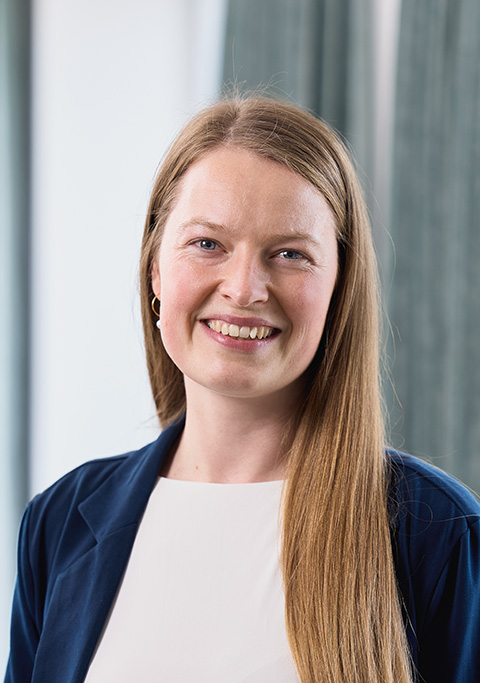
As Chief Operating Officer, Iris leads our organisational development and oversees day-to-day operations. Before joining 2-0, she worked in the biotechnology sector. As an LCA consultant, Iris has devoted her expertise primarily to the domains of sustainable agriculture and food production. She is dedicated to teaching LCA and is responsible for our educational efforts. Iris holds an M.Sc. in Biology – Biotechnology from the University of Copenhagen.
Contact for: LCA Training