

A supply-use table is a fundamental data structure in economic and environmental accounting that combines two complementary matrices to represent the flows of products within an economic system. Each table has Activities arranged along one axis and Products along the other, creating a comprehensive framework for tracking production and consumption patterns.
The supply table records the output side of the economy, documenting which products are supplied by each activity. This matrix shows what each activity produces, including both primary products and any co-products or by-products that emerge from the production process. The transpose of the supply table is sometimes referred to as a make table, which simply reorganises the same information with activities and products switching their positions on the axes.
The use table captures the input side, documenting which products are consumed by each activity as production factors. This matrix reveals the interdependencies between activities, showing how the output of one activity becomes the input for others throughout the economy. The use table is essential for understanding the production recipe or technology mix employed by each activity.
When combined, these two tables provide a complete picture of an activity's production function. The supply-use table effectively describes the average, linear production function of an activity, revealing the relationship between inputs (production factors) and outputs (products). This linear representation assumes proportional scaling, meaning that doubling all inputs will double all outputs, which is a standard simplifying assumption in input-output analysis and Life Cycle Assessment modelling.
In LCA applications, supply-use tables form the foundation for creating system models and product systems. They can be transformed through various system models into direct requirements tables, which then specify complete product systems for LCA calculations. This transformation process is particularly important in consequential LCA, where understanding how changes in demand propagate through the economy requires detailed knowledge of these production relationships.
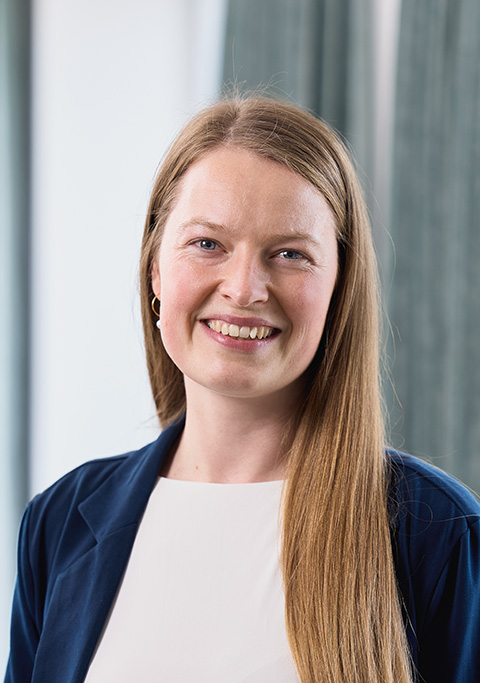
As Chief Operating Officer, Iris leads our organisational development and oversees day-to-day operations. Before joining 2-0, she worked in the biotechnology sector. As an LCA consultant, Iris has devoted her expertise primarily to the domains of sustainable agriculture and food production. She is dedicated to teaching LCA and is responsible for our educational efforts. Iris holds an M.Sc. in Biology – Biotechnology from the University of Copenhagen.
Contact for: LCA Training