



Social Life Cycle Assessment (S-LCA or SLCA) is a systematic methodology for evaluating the social and socio-economic impacts of products, services, or organisations throughout their entire life cycle, from raw material extraction through to end-of-life disposal. Whilst environmental LCA focuses on ecological impacts such as climate change and resource depletion, social life cycle assessment examines how economic activities affect people and communities at each stage of the value chain.
The methodology follows the ISO 14040 framework for life cycle assessment, consisting of four phases: goal and scope definition, life cycle inventory analysis, impact assessment, and interpretation. However, social life cycle assessment has distinct characteristics that differentiate it from environmental LCA, particularly in its focus on stakeholder groups and the nature of indicators used.
Social life cycle assessment evaluates impacts across five primary stakeholder categories: workers (including fair wages, working hours, and health and safety), local communities (access to resources, cultural heritage, and community engagement), consumers (health and safety, privacy, and transparency), society (contribution to economic development, public commitments to sustainability), and value chain actors (fair competition, promoting social responsibility). For each stakeholder group, the assessment considers relevant impact categories and their corresponding indicators, which can be quantitative, semi-quantitative, or qualitative.
The development of social life cycle assessment methodology has been guided primarily by the UNEP/SETAC Guidelines for Social Life Cycle Assessment of Products, first published in 2009 and updated in 2020. These guidelines provide a comprehensive framework for conducting assessments whilst recognising that different S-LCA methods may serve diverging purposes and applications. In 2024, ISO published the 14075 standard, providing a standardised framework for social life cycle assessment.
Social life cycle assessment complements environmental LCA and life cycle costing to form Life Cycle Sustainability Assessment (LCSA), which provides a complete picture of sustainability across environmental, social, and economic dimensions. Whilst social life cycle assessment does not prescribe whether a product should be produced, it provides valuable information for decision-making, hotspot identification, supply chain risk management, and communication of social responsibility with credible, science-based data.
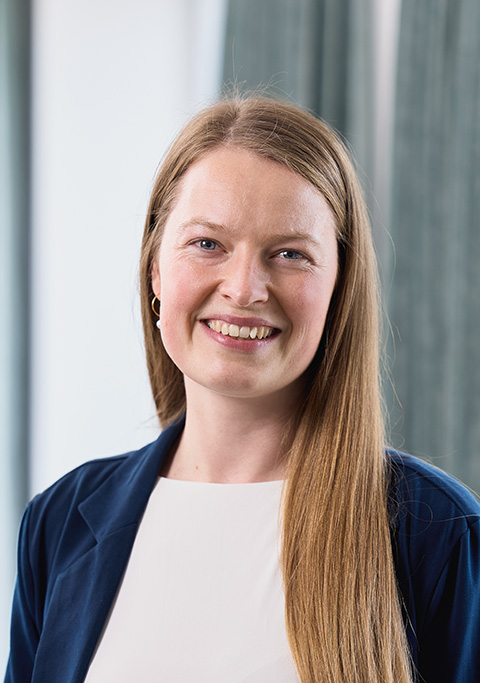
As Chief Operating Officer, Iris leads our organisational development and oversees day-to-day operations. Before joining 2-0, she worked in the biotechnology sector. As an LCA consultant, Iris has devoted her expertise primarily to the domains of sustainable agriculture and food production. She is dedicated to teaching LCA and is responsible for our educational efforts. Iris holds an M.Sc. in Biology – Biotechnology from the University of Copenhagen.
Contact for: LCA Training