

A life cycle refers to the consecutive and linked stages that a product passes through, from raw material extraction through production, use, and final disposal. In the context of Life Cycle Assessment, this encompasses all activities and processes associated with a product from cradle to grave.
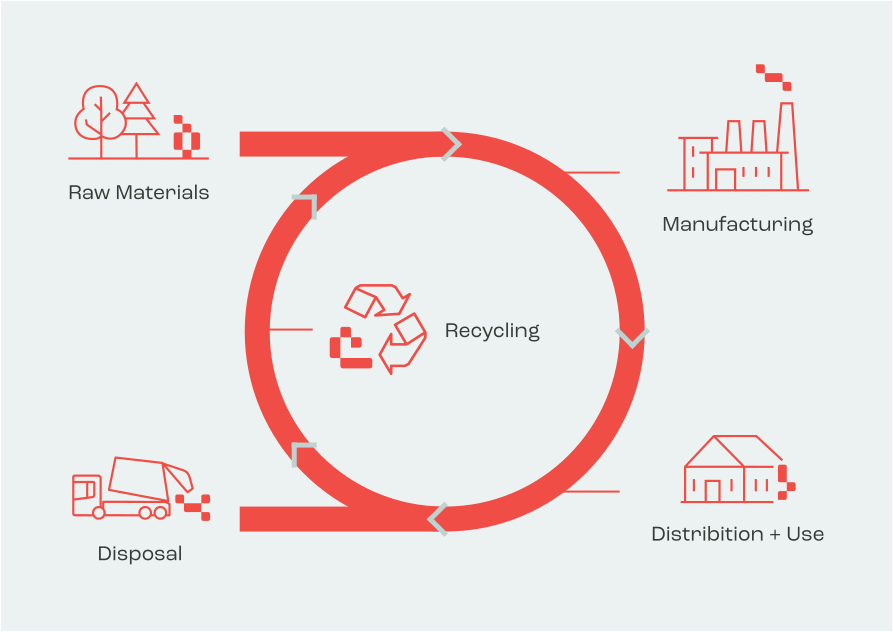
ISO 14040 defines the product life cycle as the production, use, and final disposal of a product. This comprehensive view ensures that environmental impacts are not simply shifted from one life cycle stage to another, but rather understood and managed across the entire system. The life cycle perspective is fundamental to LCA methodology, as it prevents burden-shifting and enables holistic assessment of environmental performance.
The term "life cycle" is synonymous with Product life cycle in LCA terminology. It should be noted that in marketing contexts, the term "life cycle" carries a different meaning, referring to the commercial stages of introduction, growth, maturity, and decline of a product in the marketplace.
Within LCA, the life cycle concept underlies the structure of product systems, which are modelled as systems of consecutive and interlinked unit processes. Each stage of the life cycle contributes inputs, outputs, and potential environmental impacts that must be captured and evaluated to provide a complete picture of a product's environmental profile.
Understanding the full life cycle is essential for identifying environmental hotspots, comparing alternative products or processes, and making informed decisions about product design, material selection, and end-of-life management strategies.
As Chief Operating Officer, Iris leads our organisational development and oversees day-to-day operations. Before joining 2-0, she worked in the biotechnology sector. As an LCA consultant, Iris has devoted her expertise primarily to the domains of sustainable agriculture and food production. She is dedicated to teaching LCA and is responsible for our educational efforts. Iris holds an M.Sc. in Biology – Biotechnology from the University of Copenhagen.
Contact for: LCA Training