



The discount rate is the rate at which a discount factor is reduced over a time period, typically expressed on an annual basis. It represents the percentage by which future monetary values or impacts are reduced when converting them to present value equivalents. The discount rate can vary over time, reflecting changing economic conditions, policy priorities, or temporal perspectives on sustainability.
In the context of environmental decision-making, the discount rate plays a crucial role in comparing costs and benefits that occur at different points in time. When conducting Cost-Benefit Assessment, future environmental damages, remediation costs, or deferred benefits must be adjusted to present value to enable meaningful comparison with current expenditures and impacts.
The choice of discount rate has profound implications for sustainability decisions. Higher discount rates place greater weight on near-term impacts and less weight on future consequences, which can undervalue long-term environmental damages and intergenerational equity. Conversely, lower discount rates give more weight to future impacts, better reflecting the principles of sustainable development and the interests of future generations.
Discount rates are typically applied to monetary values in economic assessments. However, the appropriateness of discounting non-monetary environmental and social impacts remains a subject of ethical and methodological debate in sustainability science. Some argue that discounting future environmental damages inappropriately devalues the wellbeing of future generations, whilst others contend that some form of temporal adjustment is necessary to reflect societal time preferences and opportunity costs of capital.
The discount rate is mathematically related to the discount factor, which is calculated as 1/(1+r)^t, where r is the annual discount rate and t is the number of time periods. This relationship allows practitioners to convert future values to net present value through the process of discounting.
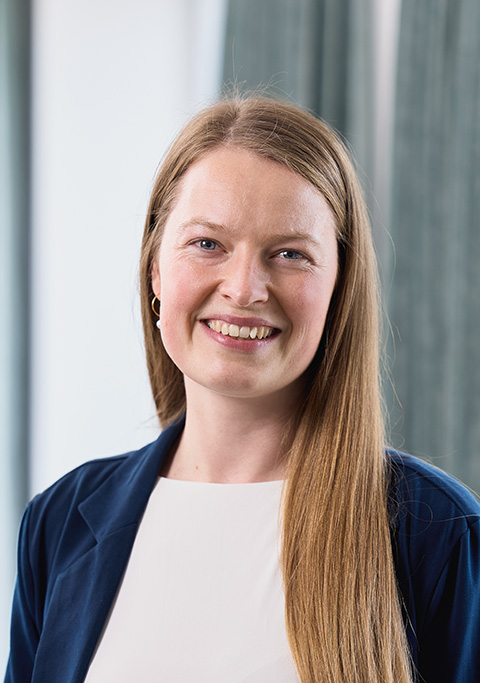
As Chief Operating Officer, Iris leads our organisational development and oversees day-to-day operations. Before joining 2-0, she worked in the biotechnology sector. As an LCA consultant, Iris has devoted her expertise primarily to the domains of sustainable agriculture and food production. She is dedicated to teaching LCA and is responsible for our educational efforts. Iris holds an M.Sc. in Biology – Biotechnology from the University of Copenhagen.
Contact for: LCA Training