



A discount factor is the ratio of the future value of a currency at constant prices to the present value of the same currency. It serves as a multiplier applied to monetary amounts expressed in future values to convert them to their equivalent present value, enabling comparison of costs and benefits occurring at different points in time.
The discount factor reflects the fundamental economic principle of time preference, which recognises that a given amount of money available today is generally worth more than the same amount available in the future. This is due to factors such as opportunity cost (the potential returns from investing that money), inflation risk, and uncertainty about future conditions. In Cost-Benefit Assessment, the discount factor becomes essential when evaluating economic flows that occur across the entire life cycle of a product or system.
The discount factor is mathematically related to the discount rate through the formula: DF = 1 / (1 + r)^t, where DF is the discount factor, r is the discount rate (expressed as a decimal), and t is the number of time periods (typically years) into the future. A discount rate of 3% per year, for example, would yield a discount factor of approximately 0.744 for a cost occurring 10 years in the future, meaning that £100 in 10 years would be valued at approximately £74.40 in present terms.
The choice of discount rate can significantly influence the results of a Life Cycle Sustainability Assessment, particularly when comparing alternatives with different temporal distributions of costs and environmental impacts. Lower discount rates place greater weight on future costs and benefits, whilst higher rates emphasise near-term considerations. The selection of an appropriate discount rate should be justified based on the decision context, considering both private discount rates (reflecting individual or organisational time preferences) and social discount rates (reflecting society's collective time preference for intergenerational equity).
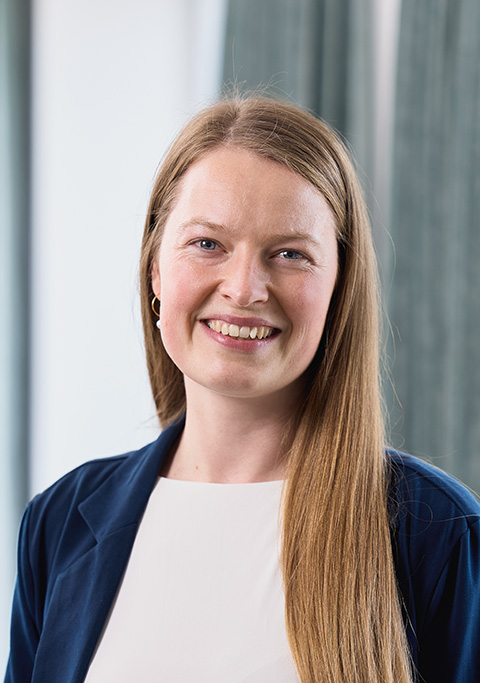
As Chief Operating Officer, Iris leads our organisational development and oversees day-to-day operations. Before joining 2-0, she worked in the biotechnology sector. As an LCA consultant, Iris has devoted her expertise primarily to the domains of sustainable agriculture and food production. She is dedicated to teaching LCA and is responsible for our educational efforts. Iris holds an M.Sc. in Biology – Biotechnology from the University of Copenhagen.
Contact for: LCA Training