Solutions



Services




Product substitution is a replacement of one product or group of products with another product or group of products. In the context of Life Cycle Assessment, this is central to understanding how changes in one part of a system can affect other parts through market mechanisms and technological alternatives.
Product substitution occurs when a product output from one activity displaces or replaces the need for a product from another activity. This displacement is particularly important when modelling by-products and waste materials that have market value or utility. When a by-product can fulfil the same function as a product that would otherwise need to be produced separately, the by-product substitutes for that separate production, thereby avoiding the associated environmental burdens.
In consequential LCA modelling, product substitution is a central mechanism for representing how changes in demand propagate through interconnected production systems. When demand for a functional unit increases, the model traces the direct production required and also identifies which products will be substituted or displaced as a consequence. This approach recognises that increased production of one product may lead to decreased production of competing or substitutable products elsewhere in the economy.
Product substitution is closely linked to system expansion, a procedure for avoiding co-product allocation by including substitution effects within the system boundary. Rather than arbitrarily partitioning environmental burdens between co-products, system expansion includes the products that are displaced by by-products as negative inputs to the system, thereby accounting for the avoided production and its associated impacts.
ISO 14040 and 14044 address product substitution implicitly through their guidance on system boundary definition and the handling of multifunctional processes. Whilst the standards do not use the term "product substitution" explicitly, it underlies the methodological approaches for dealing with co-products and for ensuring that product systems are modelled in ways that reflect real-world technological and economic relationships.
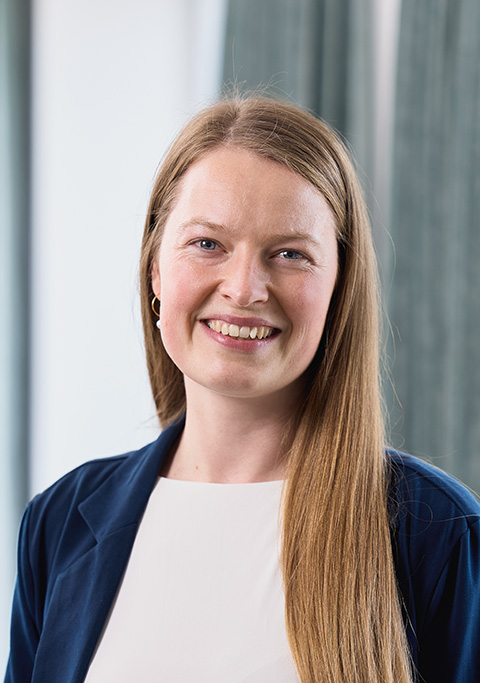
As Chief Operating Officer, Iris leads our organisational development and oversees day-to-day operations. Before joining 2-0, she worked in the biotechnology sector. As an LCA consultant, Iris has devoted her expertise primarily to the domains of sustainable agriculture and food production. She is dedicated to teaching LCA and is responsible for our educational efforts. Iris holds an M.Sc. in Biology – Biotechnology from the University of Copenhagen.
Contact for: LCA Training
Glossary terms are clearer once you have seen them applied. Our guide to what LCA is and how it works walks through the complete methodology: goal and scope, inventory modelling, impact assessment, and interpretation.
If you are working on an LCA study and want it done properly, see how we approach life cycle assessment.